With the integration and globalization of our times, societies around the world have developed. Thanks to this development, the role of women in general has changed, not only in the family but also in society. Staying home is no longer the only thing they can do; they now participate in society’s activities, and fortunately!
On the occasion of Vietnamese Women’s Day, March 8th, the marketing team of HORIZON VIETNAM TRAVEL visited the Museum of Vietnamese Women to gather information and photos in order to publish an article about Vietnamese women. This outing was considered a significant team activity in honor of all women—half of the world.
Indeed, in this article, we speak mainly about the role of Vietnamese women in the family in the past and how it has changed in recent times. Furthermore, through the image of Vietnamese women, the family, cultural, and social values of the Vietnamese people, yesterday and today, are also clearly manifested.
In the Beginning
In Vietnam, matriarchy appeared in the Upper Paleolithic. In that era, women were more respected than men since men had no economic control. Women were responsible for gathering fruits, crops, reproduction, and food distribution, giving them more power within the tribe. It can be said that this economic form during this period shows that the role of women became important.
During the Feudal Period
However, with the development and changes of history, matriarchy was replaced by patrilineality. After China came and maintained its dominance over Vietnam for over a thousand years, Chinese culture influenced Vietnamese tradition. The Chinese ruled and educated the Vietnamese people through their literature and ideas, particularly Confucianism. Under Confucianism, women were heavily influenced. With patrilineality, women were not recognized; only men were the heads of the family and society. Consequently, women were barely treated the same as men in all aspects of life.
In the family, women had to do all the household chores, take care of their husbands, their parents as well as their children and educate them. The family is the nucleus of society according to Confucianism, but Confucianism refused to recognize the important role of women in the family even though they did everything and took care of the family.
Indeed, living in a patriarchal society with strong Confucian values, Vietnamese women had many norms to respect. Three obediences and four virtues are what many Vietnamese women knew by heart and that were passed down from grandmother to mother, from mother to daughter.
The Three Obediences include:
— Until marriage, a woman must submit to her father as a daughter
— After marriage, she submits to her husband as a wife
— In the case that her husband disappears, she must submit to her son.
Four Virtues are:
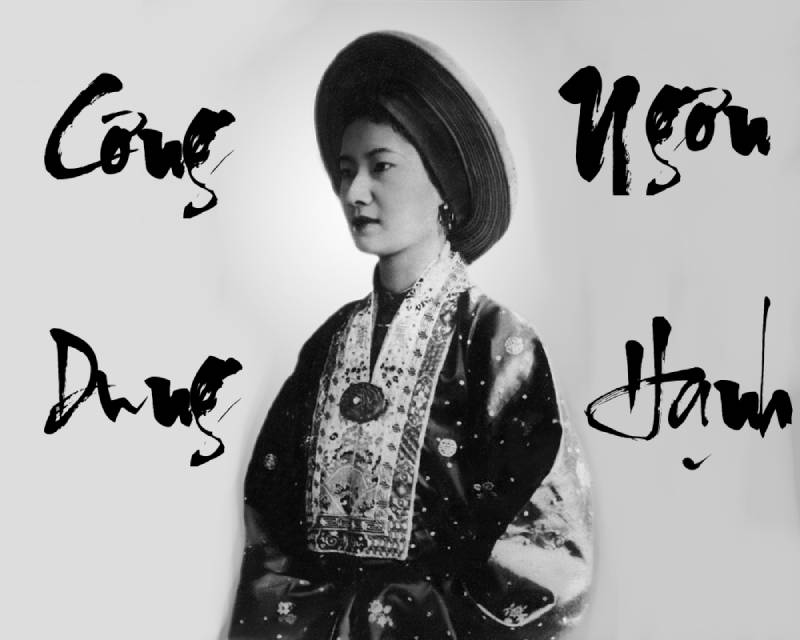
Công – Dung – Ngôn – Hạnh in Vietnamese
– Good domestic skills: embroidery, sewing, cooking, especially to educate children
– Beauty and sweet appearance: taking care of one’s beauty, as it is also considered the pride of their husbands. Women do not need to be too beautiful, but well-groomed, clean, and not neglected!
– Appropriate speech: girls must learn to speak gently, without haste, and with respect from a young age.
– Exemplary conduct: this virtue is generally considered the most important because it could significantly influence women’s happiness in life. Her conduct is reflected in how she behaves and treats the people around her. It is essential that a woman, at home, be respectful to the elderly, caring toward the young, obedient to her husband, take good care of her children, and live in harmony with her husband’s family. During outings, she must show moderation.
Regarding work and education, women had no work outside the family. They stayed only at home, did family work, agricultural activities such as animal husbandry, cultivation, etc., and took care of children. During this period, few women were able to study. Most women in rural areas were illiterate. Only some women from wealthy families could study, but they could not reach high levels of education. They studied only enough to make their fathers and husbands happy. It was ridiculous and unjust. Furthermore, women had to learn to cook well, to become a good wife and a good mother.
Another unjust thing is that they could not decide the number of children they wanted to have because they had to keep giving birth until they had a son. Paternity emphasized that only men could inherit family belonging and family succession. It can be said that for the people of that period “One boy is positive; ten daughters are still negative”. Consequently, only men could participate in and become members of public office.
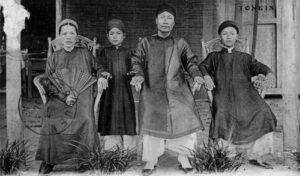
It can be seen that during this feudal period, women were invisible in society and even in their family. They had no voice, nor decision, and could not say what they thought. Even in marriage, they did not yet have the right to choose the person they wanted to marry. And when they were not satisfied with their marriage, they could not divorce; only men could ask for divorce.
During the Colonial Era
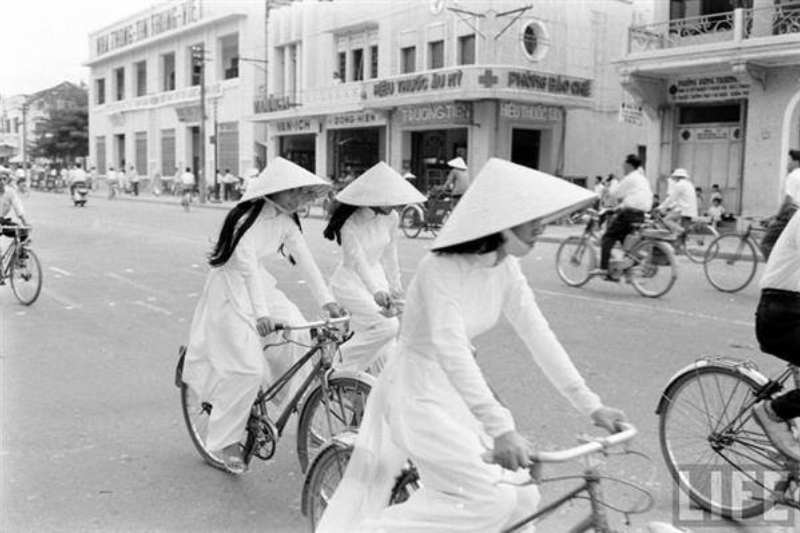
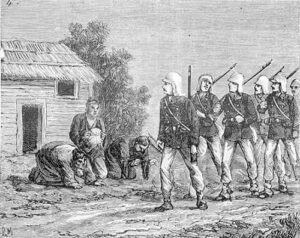
The feudal period was replaced by the colonial period which began with the arrival of the French and Americans in Vietnam. During this period, under the influence of the freedom ideas of these two countries, there were less rigid regulations for Vietnamese women compared to the feudal era. Furthermore, with the Vietnam War, women had to go out and had a specific role in providing support. However, women in rural areas were still invisible and did not have a balanced role.
Moreover, the position of women took a new step after the victory of the revolution in 1945. The government officially recognized equality between men and women. For example, women can go to school like men.
Today
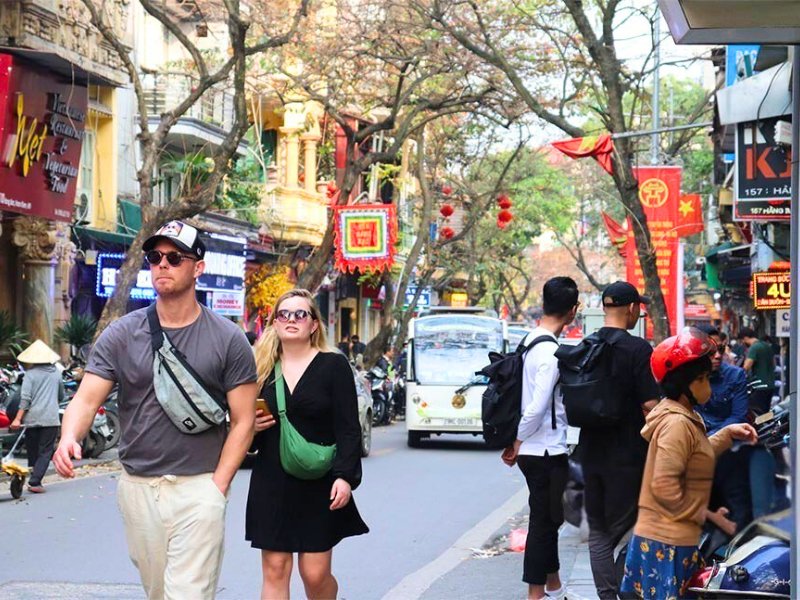
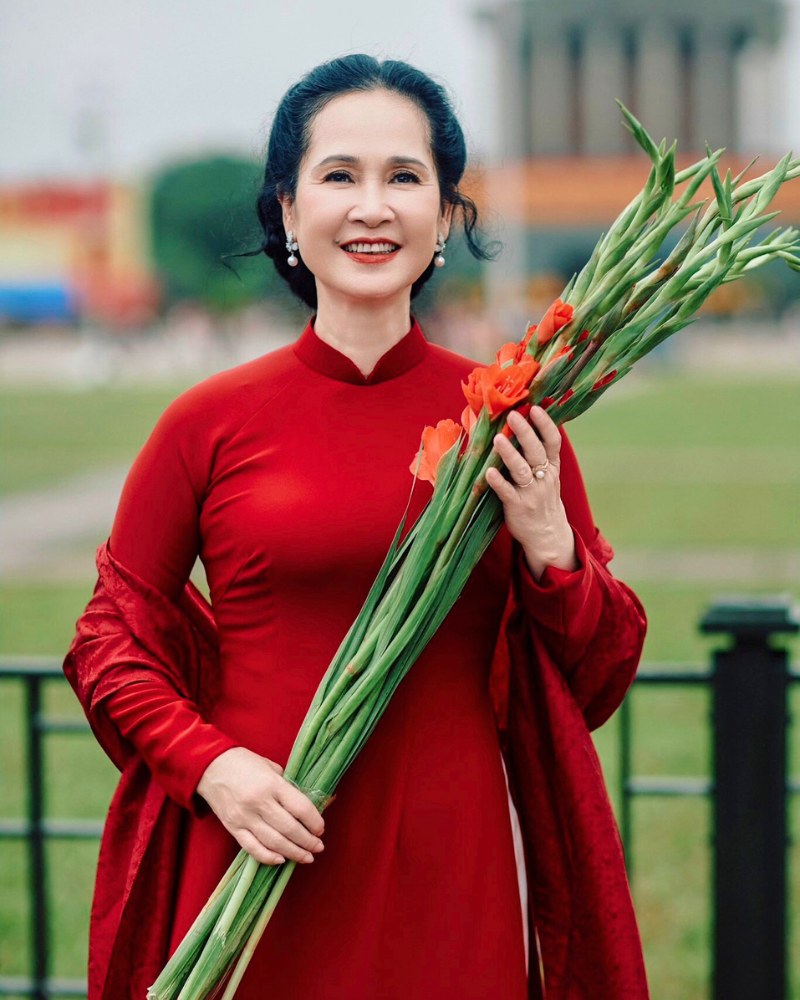
Nowadays, with the development of society and the economy, Vietnamese women are more independent than before. Now, they obtain a balanced role in families as well as in society. The thinking of Vietnamese people about women has now changed. Today, women no longer have to worry about social barriers or social prejudices.
In contemporary life, Vietnamese women contribute to building a peaceful society in full development. Traditional values make contemporary Vietnamese women generous women, full of energy and passion, who also know how to assert their personality. They engage in studies, enrich their knowledge, to improve their skills. They thus enhance their role in the family and in society.
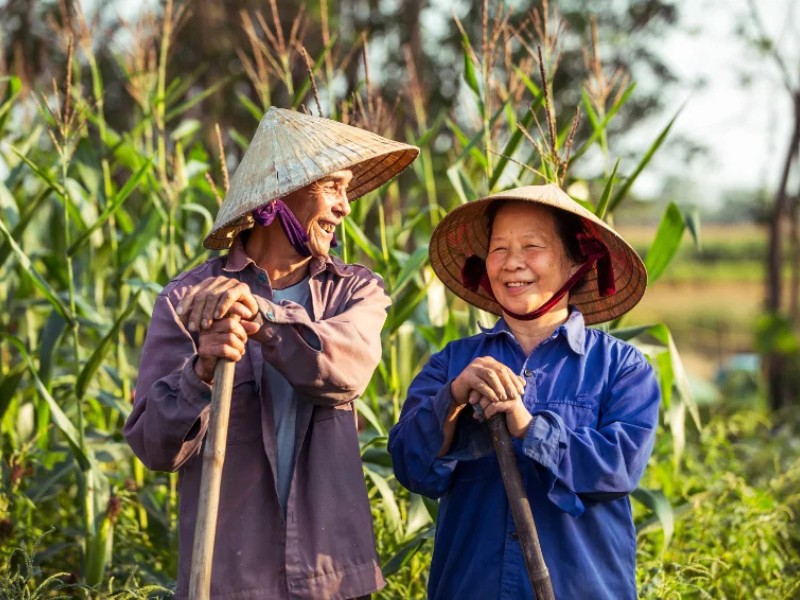
Indeed, in the family, they no longer stay home and no longer do all the household chores alone. These family things are now the responsibility of both men and women. Women can ask their husbands to help them do household work and take care of the children. They can also participate in the decision-making process regarding family problems. They preserve family happiness with their love, their sense of responsibility, and their courage in facing trials. In society, they participate in social life with dynamism and competence, passion and generosity. Prominent female politicians, successful businesswomen, devoted scientists, talented artists, performing athletes, courageous farmers, all these generous women advance society. They are only at the beginning of their history and will continue to play an essential role in national development that opens to the world.
In short, regardless of the period, women have responsibilities that correspond to the duties and morality of Vietnamese people. Although things have changed a lot, the roles between men and women are still well defined, and there is still a certain imbalance of tasks! The difference today is that women are free to assume these responsibilities and remain educated in this regard. Whatever the difficulty; Vietnamese women consider the following missions as the most noble and sacred things.
Childbirth and the Placenta
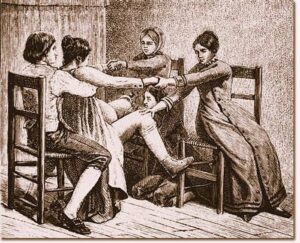
Before the 1960s, women often gave birth at home or outdoors. According to populations, they gave birth standing, sitting, or on their knees. To facilitate childbirth, the Việt eat a sesame soup. In case of difficulty, the Hmong and Yao invite a ritual master. The Thai apply a sesame paste to the belly. The Hmong bury the placenta at the foot of the main column of the house. The Êđê place it in a gourd buried by the side of a spring. Other populations hang it in a forest tree. Today childbirth occurs in dispensaries and the cord is ritually cut at home.
Meal Preparation
For women, preparing the daily meal requires a lot of time. They obtain basic products through fishing, gathering, agriculture, or shopping at the market. De-hulling and sifting rice, storing and preserving food have always been women’s work. They know the seasons for vegetables, fruits, and animals. From early childhood, the daughter learns to cook with her mother. Very early, she knows how to cook rice, ferment vegetables, and make alcohol. Each population has its own way of preserving food. They dry them in the sun or by fire, salt them, or preserve them in fat.
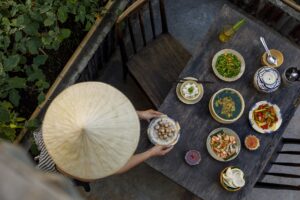
Today the preparation of meals has changed a lot. Almost everywhere, the de-hulling machine is used. The kitchen modernizes. Cooking over three stones on a wood fire is gradually replaced by charcoal, gas, or electricity. Facing the market economy, self-sufficiency has practically disappeared.
The Education of Children
In the traditional family, the division of labor between father and mother is rather marked. The woman ensures the household chores and the education of children while the man is the economic pillar of the family. The pregnant woman protects her child by eating well and resting. When the child grows, she teaches him the essential things of life through lullabies, legends, stories, and also through educational toys to familiarize him with daily work. The girl accompanies her mother in all her activities to learn her future role as a woman.
The habit of carrying the child on one’s body remains very frequent in large cities. In the countryside of the north, all children wear hats. They protect them from the cold and, magnificently decorated, they embellish them. Often adorned with amulets, they are thus a protection against evil spirits. In contemporary society, both parents play an equally important role in the education of children.
Vietnamese people have the saying:
« Lên non mới biết non cao
Nuôi con mới biết công lao mẫu tử »
In English:
« It is by climbing the mountain that one knows how high it is
It is by raising a child that one understands the sacrifices of parents »
Conclusion
It can be summarized that in the trend toward integration and globalization, the role and position of Vietnamese women in society are recognized and balance compared to men. However, there is still another side where women are not respected. The more society develops, the more opportunities Vietnamese women have. They represent half of the world, their role and position in the family as well as in society should therefore be more considered.
 +84 9 75 46 33 10 (Whatsapp)
  info@horizon-vietnamtravel.com
  Français
  Español
  Português
  Deutsch